Greenhouse Farming to Wean Community College from Subsidy
By
Anderson Fumulani
Mangochi Community Technical College (MCTC) is fast becoming a model of how
Malawi’s technical and vocational institutions can combine skills training with
entrepreneurship, all under one
roof. Once it was just a quiet campus offering hard skills training in Automobile
Mechanics, Bricklaying, Carpentry and Joinery, Electrical Installation and
Electronics, Fabrication and Welding, Edible Horticulture, ICT, Plumbing, and
Tailoring and Fashion Design courses.
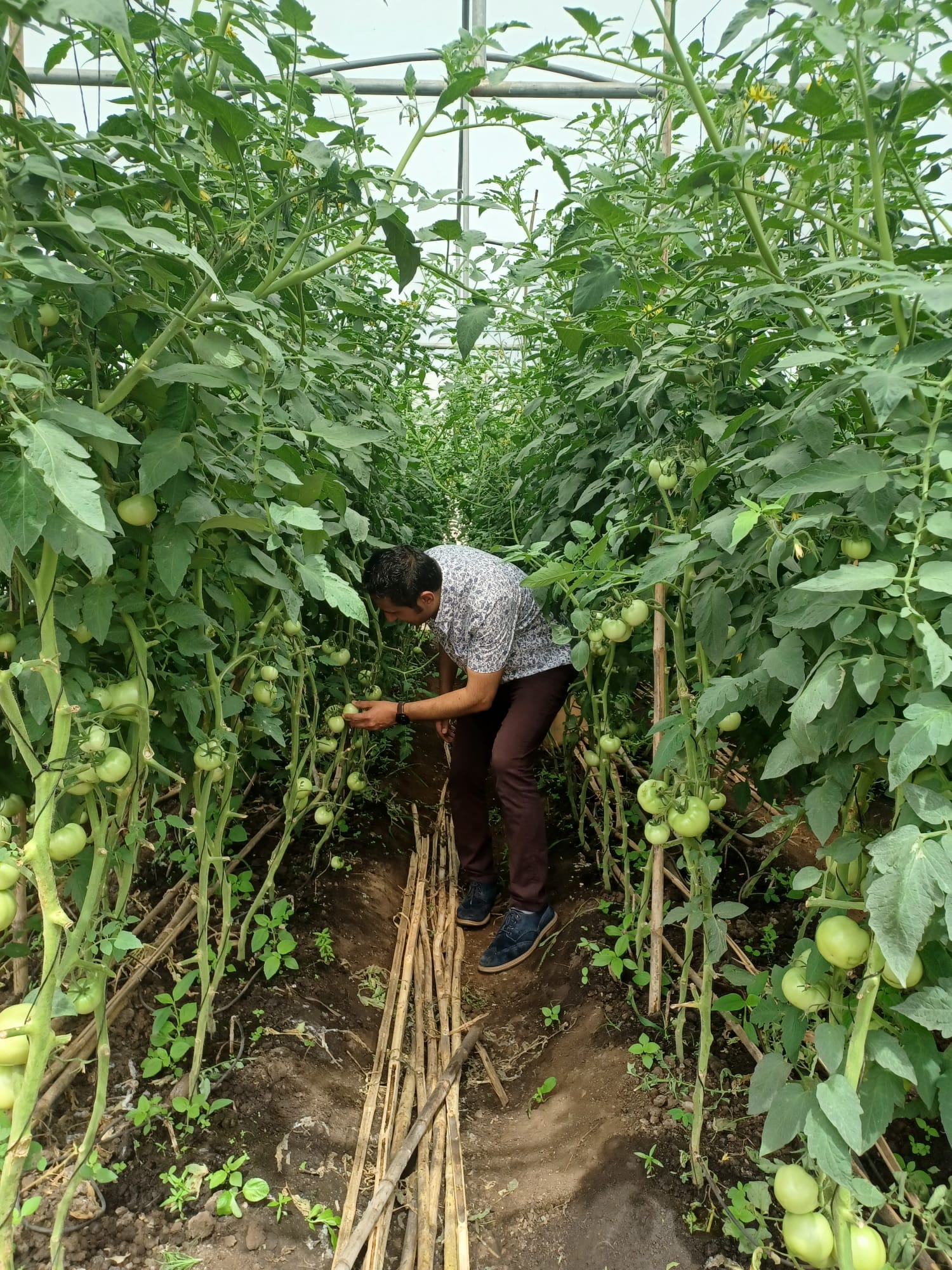
The story for Mangochi CTC has since changed, due to the introduction of greenhouse farming
with financial support from the Skills for A Vibrant Economy (SAVE) Project. Construction
of the green houses cost K70 million.
Green house farming has propelled
Mangochi CTC to a new height of popularity for growing and selling a variety of
vegetables including tomatoes and Chinese. The greenhouse farming is slowly
helping the college to reduce dependence on government funding for its operations.
Principal of the College, Mbasa
Mwawembe describes the greenhouse
initiative as “a game‑changer that has transformed the college from a subsidy‑dependent
institution to a self‑reliant income generator.” Suffering an initial loss in
its first quarter, the greenhouse project jumped to profitability between January and March 2026, driven
mainly by thriving tomato and vegetable sales patronized by the community of vendors around Mangochi town.
From Pilot Project to Profit Centre
Mangochi CTC financial
records showed a sharp turnaround. During first production cycle of October–December 2025, the Greenhouse
venture suffered a loss after generating a revenue of K691,550 from an expenditure of K782,400,
resulting in a modest loss of K 90,850 or nine percent. The start‑up
costs such as procurement of seedlings,
irrigation systems, and tools contributed to the loss. By January–March 2026 cycle, however, income had jumped
to K1.63 million from an
investment expenditure of K764,600, representing a 29% profit.
In terms of daily earnings,
the Principal said that
they had risen from K10,000 during the launch
phase to over MWK 100,000 at the
peak season. “These
revenues now finance staff allowances, stationery, transport, and minor
maintenance,” Mwawembe explained,
pointing out that these recurrent costs had relied on unpredictable and delayed government subsidy before.
New Skills Evolution
What began as an income experiment has evolved into a skills laboratory according to the Principal.
“Students at Mangochi Community Technical College now learn high‑value greenhouse
farming techniques - from
nursery management and irrigation control to pest management, marketing, and
record‑keeping,” he explained.
Since modern greenhouse farming is still rare in Mangochi District, the college has become a hub
for the youth and
community farmers seeking practical exposure to greenhouse agribusiness.
Plans are also underway
to introduce short training courses open to
local entrepreneurs particularly women, youths and other smallholder farmers,
turning knowledge transfer into an additional income stream, said the principal.
Scaling Up for Greener Future
In the coming quarters, Mangochi
CTC aims to expand tomato production, institute weekly profit tracking,
and channel part of its surplus earnings into the college’s recurrent budget.
The medium‑term plan (1–2 years) envisions
additional greenhouses, branded produce targeting local and tourism markets,
and a seedling nursery serving community growers.
Mwawembe said 30 to 40 percent
of profits will be reinvested in strengthening infrastructure - fencing, water reservoirs, and
protective netting - to
maintain production consistency. The college is also exploring partnerships
with TEVETA, Islamic Relief,
and local councils for matching‑grant financing to upscale operations.
Sustaining the Institution
The greenhouse project has provided stability at a time when public
institutions remain vulnerable to irregular government disbursements. In early 2026, for example, the college
opened the academic term with a negative balance of MWK 228,700, but the greenhouse
income kept its operations
afloat.
“The project gives us breathing space,” said Mwawembe. “We can maintain key functions and motivate staff
even when government funding delays,” he added. Proceeds
have supported staff refreshments, office supplies, and local transport,
reinforcing morale and productivity, he said.
A Blueprint for Other Colleges
An observer and regular buyer of vegetables
at Mangochi CTC, Mrs Rhoda
Kapichi suggested that the institution can be a model to other government
institutions to emulate the Income Generating Activities (IGA) practice and
guide for self-sustainability rather than solely depend on government funding. She said
Mangochi CTC could guide other community technical colleges reforming
under the SAVE Project. Keys to success include transparent accounting,
strategic reinvestment, and student participation at every stage of the
production cycle.
As the greenhouses expand and the curriculum broadens, Mangochi CTC stands
out as proof that education and entrepreneurship can grow on
the same soil, within the
same compound and under the same roof to produce profits, practical skills, and
community prosperity.
What started as a pilot program
under the SAVE Project has blossomed into one of Malawi’s quiet business
revolutions: a technical college earning its way while cultivating the next
generation of agripreneurs.
The SAVE Project is funded
by the World Bank for US100 – million. And Mangochi CTC is among the 15 beneficiary
Competitive Grant Winner (CGW) institutions.